Introduction
A food distribution business was facing repeated product spoilage even after investing in a cold room facility. Fresh products were losing quality earlier than expected, frozen items were showing signs of temperature abuse, and customer complaints were increasing. The interesting part was that the cold room equipment was not completely faulty. The real issue was poor day-to-day cold room management.
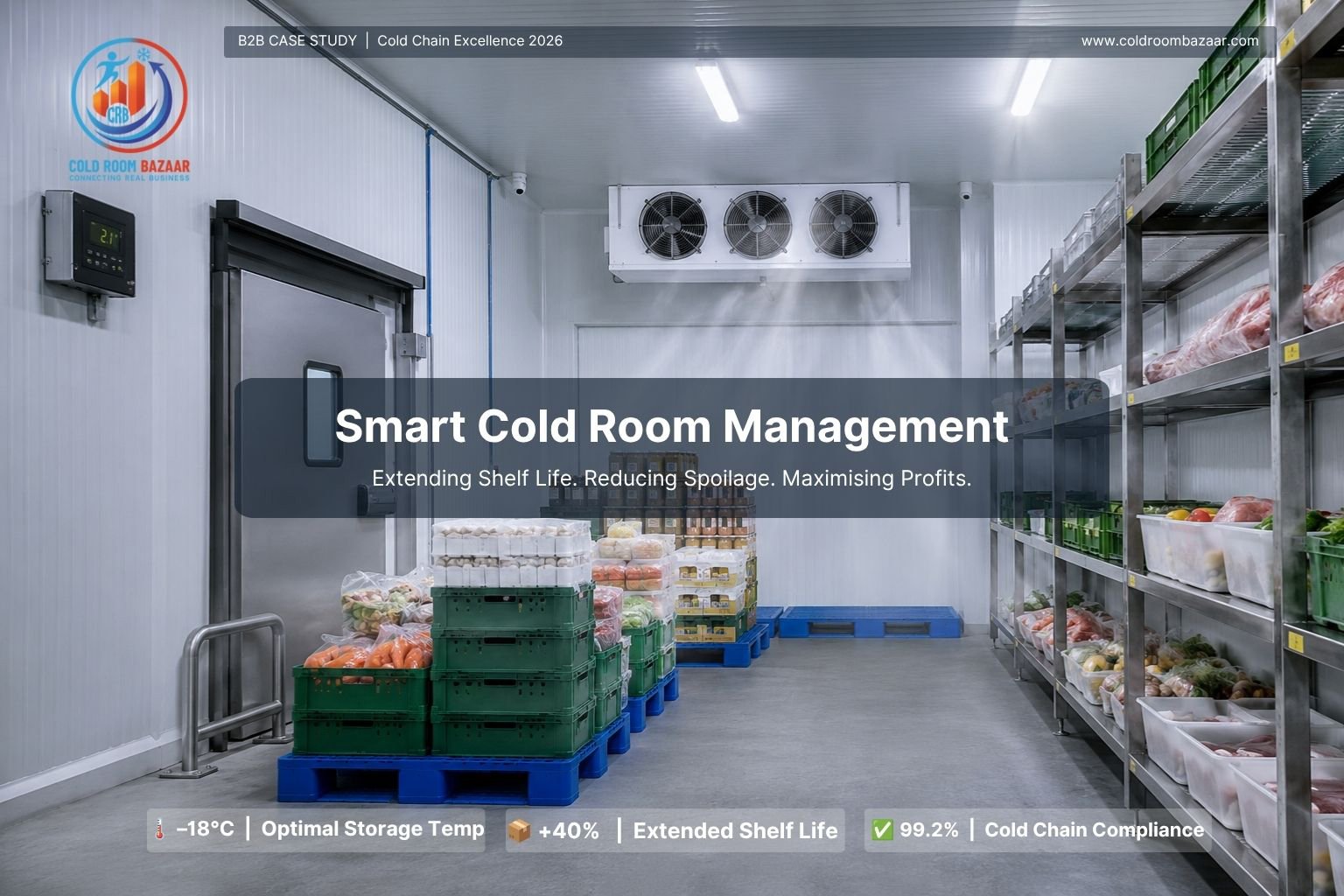
This case study explains how better cold room management practices helped the business extend product shelf life, reduce spoilage, improve product quality, increase operational efficiency, and reduce business losses. The improvement was achieved through better temperature monitoring, airflow management, product zoning, preventive maintenance, door discipline, and staff training.
In the cold chain industry, a cold room is not only a storage space. It is a controlled environment where temperature, humidity, airflow, loading pattern, product handling, maintenance, and monitoring work together to protect product quality. Even a well-built cold room can fail to deliver the expected result if daily operating practices are weak.
Client / Industry Background
Industry: Food distribution and cold storage operations
Products Stored: Fresh fruits, vegetables, dairy items, frozen food packets, and packaged food products
Storage Type: Multi-product cold room facility
Business Objective: Improve shelf life, reduce spoilage, maintain product quality, and improve operational efficiency
The client operated a regional distribution center that supplied products to retailers, restaurants, small supermarkets, and food service businesses. Their daily operations depended heavily on product freshness, timely dispatch, and consistent quality. Any product rejection directly affected profit margins and customer trust.
The business had already invested in cold room infrastructure, including insulated PUF panels, refrigeration units, cold room doors, evaporator units, and basic temperature controllers. However, despite having the required setup, the company was facing frequent complaints related to product softness, moisture damage, early spoilage, freezer burn, inconsistent freshness, and reduced shelf life after delivery.
The management initially assumed that the refrigeration system needed major replacement. But after a proper operational review, it became clear that the main problem was not only equipment performance. The bigger issue was poor cold storage management and lack of a structured operating process.
The Challenge: Short Product Shelf Life Issues
The main challenge was that products were not lasting as long as expected. Fresh produce that should have remained marketable for several days was showing quality decline much earlier. Dairy products were exposed to temperature fluctuation risks, while frozen items were showing signs of partial thawing and refreezing.
Key Problems Observed
- Frequent temperature fluctuations inside the cold room
- High product spoilage during peak loading and dispatch hours
- Improper product stacking that blocked airflow
- Cold room doors remaining open for longer periods
- No fixed schedule for temperature logging
- Mixed storage of products with different temperature requirements
- Moisture accumulation in selected storage areas
- Delayed cleaning and preventive maintenance
- Lack of staff training on cold room handling practices
The business estimated that spoilage and product rejection were causing regular monthly losses. Along with direct product loss, the company was also losing customer confidence because retailers expected consistent product quality during delivery.
Root Cause Analysis
A practical cold room audit was carried out to understand the root causes. The analysis focused on temperature control, airflow, product movement, loading practices, equipment condition, maintenance records, and staff operating habits.
1. Inconsistent Temperature Monitoring
The cold room temperature was checked manually, but not at fixed intervals. Readings were not recorded properly, which made it difficult to identify when fluctuations were happening. During loading and dispatch, the temperature often increased because doors were opened repeatedly.
2. Poor Airflow Management
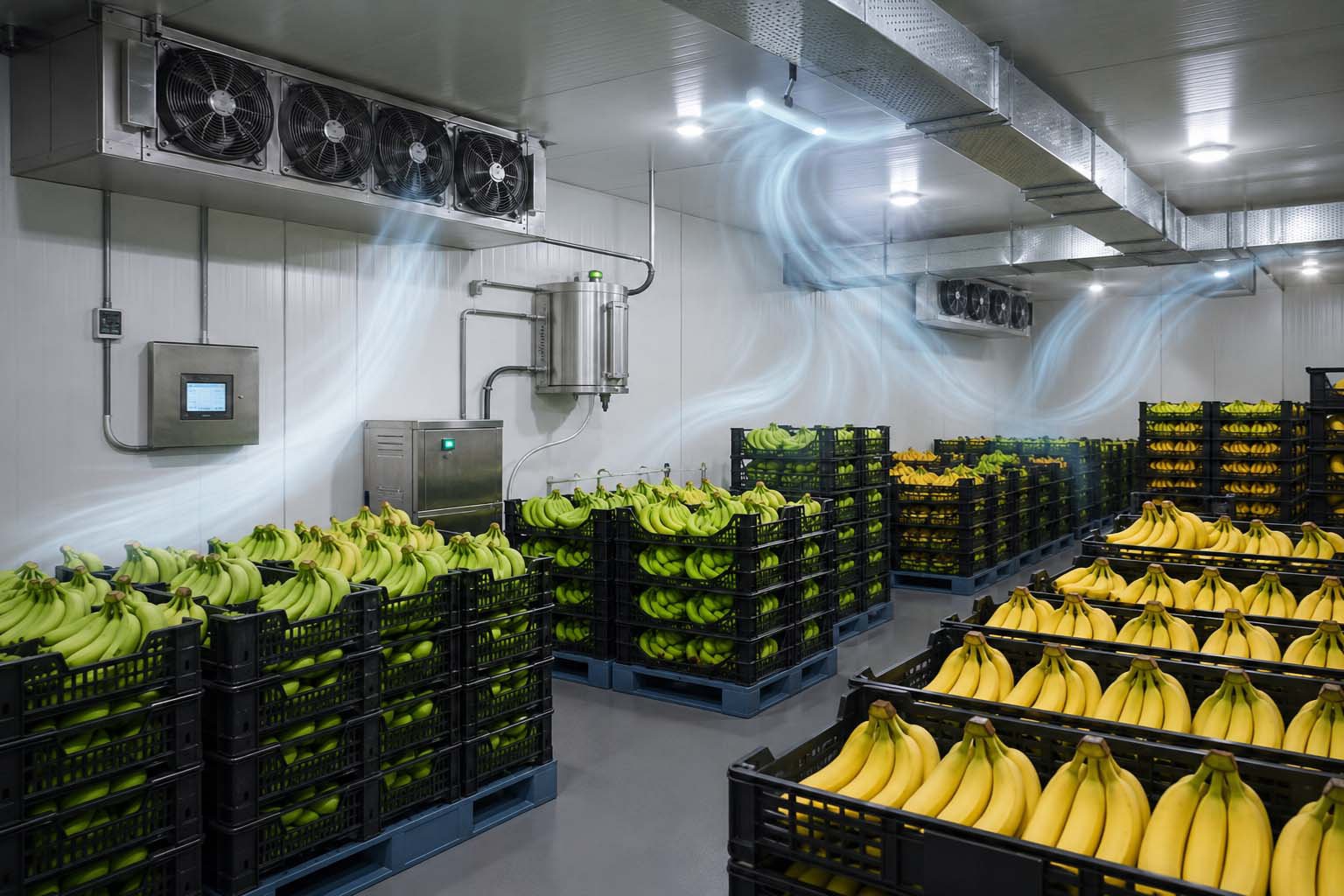
Products were stacked too close to evaporator units, walls, and each other. This blocked cold air circulation and created hot spots inside the cold room. Some products received proper cooling, while others remained in unstable temperature zones.
3. Incorrect Product Segregation
Fresh fruits, vegetables, dairy products, and frozen food items were sometimes stored without proper zoning. Each product category has different temperature and humidity requirements. Mixed storage without planning reduced product shelf life and increased spoilage risk.
4. Door Opening Losses
Staff frequently opened the cold room door for loading, stock checking, and dispatch preparation. The door was sometimes left open longer than required. This caused warm air entry, condensation, temperature rise, and extra load on refrigeration equipment.
5. Lack of Preventive Maintenance
The refrigeration system was working, but maintenance was mostly reactive instead of preventive. Coil cleaning, drain checking, gasket inspection, sensor calibration, and airflow checks were not performed on a fixed schedule. This reduced system efficiency over time.
The Solution: Better Cold Room Management Practices
The recommended solution was not only equipment repair. The main focus was to improve daily cold storage management through better monitoring, process discipline, staff training, maintenance planning, and product handling standards.
Solution Approach: Improve cold room performance through standard operating procedures, better temperature control, airflow optimization, product zoning, preventive maintenance, and staff training.
Temperature Control and Monitoring
- Created a structured temperature logging process
- Defined acceptable temperature ranges for different product categories
- Started daily review of temperature fluctuations
- Used alerts for abnormal temperature rise
- Checked sensor accuracy and controller settings
Improved Product Stacking and Airflow
- Maintained proper gap between products and walls
- Kept air circulation paths clear
- Avoided overloading the cold room beyond recommended capacity
- Used pallets and racks for better product arrangement
- Created separate zones for different product types
Better Door Management
- Reduced unnecessary door openings
- Planned loading and unloading in batches
- Used a door opening checklist for staff
- Inspected door gaskets and closing alignment
- Created a dispatch staging process to reduce cold air loss
Preventive Maintenance Schedule
- Scheduled regular evaporator coil cleaning
- Checked refrigerant performance and cooling efficiency
- Inspected drain lines, fans, sensors, and electrical panels
- Reviewed compressor running hours
- Maintained a cold room maintenance logbook
Implementation Process
The improvement process was implemented step by step to avoid disruption in daily operations. The aim was to make the cold room more reliable without stopping business activity.
| Phase |
Action Taken |
Business Purpose |
| Phase 1 |
Cold room audit and temperature study |
Identify operational gaps and cooling issues |
| Phase 2 |
Product zoning and stacking correction |
Improve airflow and product safety |
| Phase 3 |
Temperature logging and alert process |
Control temperature fluctuation risk |
| Phase 4 |
Door management and dispatch planning |
Reduce warm air entry and energy load |
| Phase 5 |
Preventive maintenance schedule |
Improve system reliability and efficiency |
| Phase 6 |
Staff training and SOP implementation |
Build long-term operational discipline |
Staff members were trained on product handling, door discipline, basic temperature checks, cleaning practices, and reporting abnormal conditions. Simple SOPs were displayed near the cold room area so that operators could follow the process easily.
Results and Benefits
Within a few months of implementing better cold room management practices, the business started seeing measurable improvements in product quality, shelf life, operational control, and cost reduction.
25%–35% Reduction in Spoilage
Better temperature control and product handling helped reduce spoilage across fresh and packaged products.
Extended Product Shelf Life
Fresh produce maintained quality for a longer period due to improved airflow, zoning, and humidity control.
Improved Product Quality
Retailers reported better freshness, reduced moisture damage, and fewer quality complaints.
Better Operational Efficiency
Planned loading, dispatch, and maintenance reduced confusion and improved cold room utilization.
Measurable Business Outcomes
- Product rejection complaints reduced by approximately 30%
- Temperature fluctuation incidents reduced during peak dispatch hours
- Monthly spoilage-related losses reduced significantly
- Cold room equipment performance became more stable
- Staff handling process became more organized and accountable
- Customer confidence improved due to consistent product quality
The most important improvement was operational awareness. Earlier, the business treated the cold room as only a storage facility. After the improvement process, the team understood that cold room management is a daily operational responsibility.
Key Takeaways
This case study highlights an important lesson for cold storage owners, food distributors, dairy businesses, pharma storage operators, fruit and vegetable suppliers, and frozen food companies: product shelf life depends on both infrastructure and management.
Important Lessons for Cold Room Operators
- A cold room must be monitored daily, not only when problems appear.
- Temperature control is important, but airflow management is equally critical.
- Different products should be stored according to their specific temperature and humidity needs.
- Door opening discipline can reduce temperature fluctuation and energy waste.
- Preventive maintenance is more cost-effective than emergency breakdown repair.
- Staff training plays a major role in reducing spoilage and maintaining quality.
- Cold room data, logs, and SOPs help businesses make better decisions.
FAQ: Cold Room Management and Product Shelf Life
1. How does cold room management improve product shelf life?
Cold room management improves product shelf life by maintaining the right temperature, humidity, airflow, product arrangement, and handling process. When these factors are controlled properly, products stay fresh for longer and spoilage risk is reduced.
2. What causes short shelf life in cold storage?
Short shelf life can be caused by temperature fluctuations, poor airflow, overloading, improper stacking, frequent door opening, mixed product storage, lack of cleaning, and delayed refrigeration maintenance.
3. Why is temperature monitoring important in a cold room?
Temperature monitoring helps identify cooling problems before they cause product damage. Regular logs and alerts allow operators to take quick action when temperature goes outside the safe range.
4. How can businesses reduce spoilage in cold rooms?
Businesses can reduce spoilage by following proper cold room management practices such as product zoning, preventive maintenance, door control, temperature logging, staff training, and correct loading patterns.
5. Is preventive maintenance necessary for cold rooms?
Yes. Preventive maintenance helps maintain cooling efficiency, reduce breakdowns, improve energy performance, and protect stored products from unexpected temperature rise or equipment failure.
Conclusion
This case study shows that improving product shelf life is not always about installing a new cold room or replacing major equipment. In many cases, better cold room management can make a major difference. By controlling temperature, improving airflow, reducing door losses, organizing products properly, maintaining equipment, and training staff, businesses can reduce spoilage and protect product value.
For food, dairy, pharma, frozen products, fruits, vegetables, meat, seafood, and cold chain businesses, cold room management directly impacts profitability. Every hour of temperature instability can affect quality. Every poor handling practice can reduce shelf life. Every delayed maintenance activity can increase risk.
A well-managed cold room helps businesses deliver better products, reduce waste, improve customer trust, and increase operational efficiency. This is why cold storage owners and operators should treat cold room management as a core business process, not just a technical activity.
Need Reliable Cold Room Solutions or Service Support?
Cold Room Bazaar connects buyers with relevant cold room manufacturers, cold storage contractors, refrigeration service providers, PUF panel installers, temperature monitoring solution providers, and cold chain industry vendors.
Find trusted cold chain businesses for your project, maintenance, installation, or product requirement.
Contact: +91 786-0000-472

 10/06/2026, 3:37 pm


Comments 0